
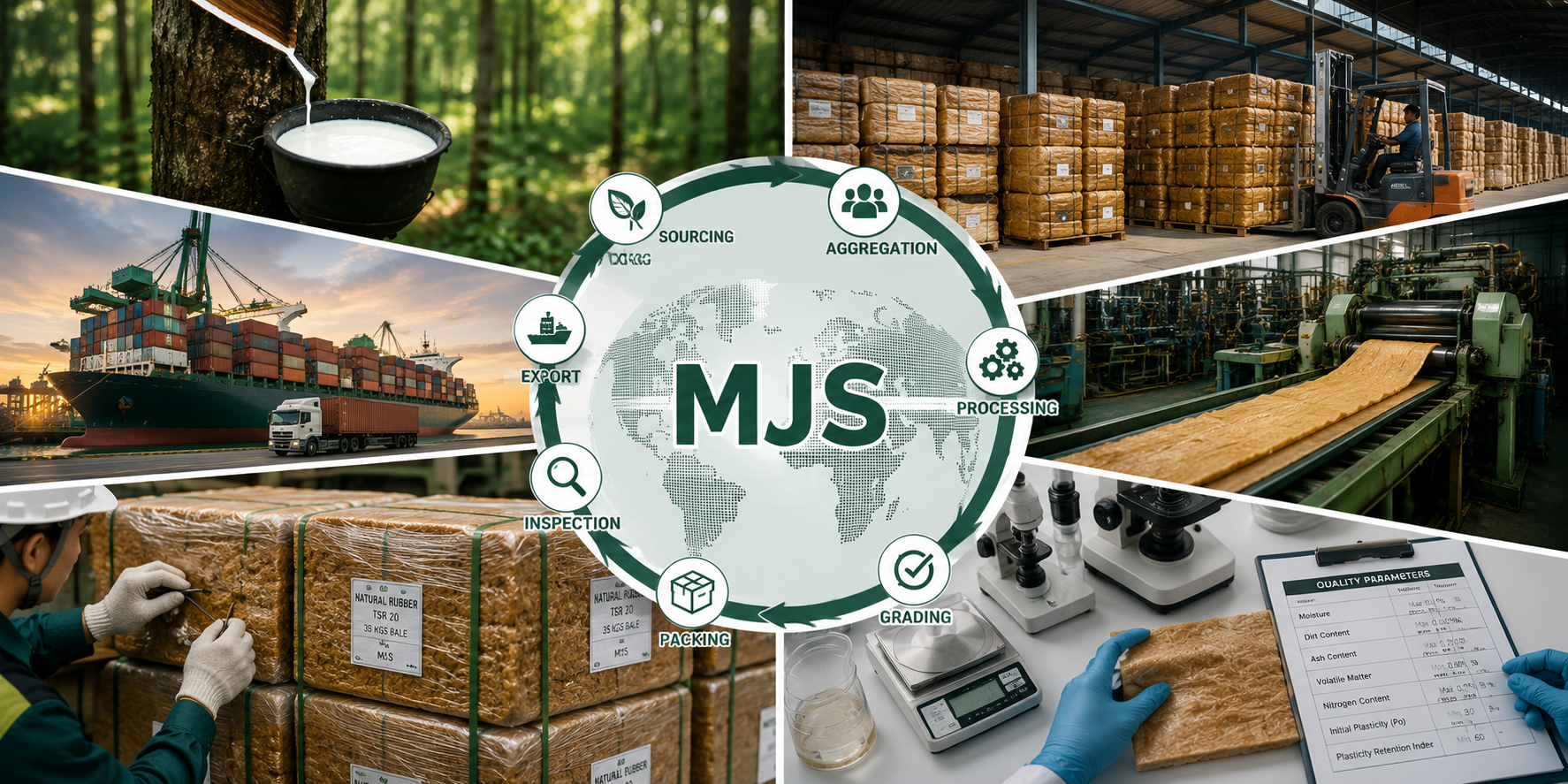
From Plantation and Processor to International Buyer.
MJS coordinates origin-based sourcing, aggregation, processing, grading, packing, inspection and export through one wholesale supply structure.
Origin network
MJS can structure supply through established rubber-producing regions, depending on the required grade, volume, pricing, logistics and buyer compliance requirements.
| Region | Countries presented on the website | Positioning |
|---|---|---|
| West & Central Africa | Côte d’Ivoire, Ghana, Cameroon | Strong plantation and smallholder supply, processor and Atlantic export channels. |
| Southeast Asia | Thailand, Indonesia, Vietnam, Malaysia | Established natural-rubber production, technical grading and export infrastructure. |
Supply-chain sequence
| Stage | What the website should say |
|---|---|
| 1. Buyer requirement | The process begins with grade, specification, quantity, destination, timing and Incoterm. |
| 2. Source allocation | MJS identifies suitable plantation, aggregation, processor and exporter channels. |
| 3. Processing & grading | Raw natural rubber is processed and graded to the agreed product standard. |
| 4. Packing & identification | Bales are wrapped, marked, weighed and linked to batch and processor records. |
| 5. Independent inspection | Quantity, quality and packing can be inspected before loading. |
| 6. Export & freight | MJS coordinates export documents, containers, port handling, freight and cargo insurance. |
| 7. Delivery documents | The buyer receives the agreed commercial, quality, origin and shipping-document pack. |
Source confidentiality
MJS protects its upstream commercial relationships, source pricing and supply channels. Buyers receive the transaction documents required to verify origin, processor, batch, quality and shipment without unnecessary disclosure of confidential commercial arrangements.